
Finding the best ai translator for video generation takes a little more care than searching for a simple caption translator. The 69 tools compared here span genuine multilingual video platforms, avatar studios, and adjacent video generators that can help create localized content from text, images, or existing footage. Vidnoz AI is the clearest overall fit for translation, while the rest are most useful when your localization workflow starts with fresh video creation rather than a finished clip.
Top picks
| Pick | Tool | Best for | Why it stands out |
|---|---|---|---|
| 1 | Vidnoz AI | Businesses | Video translation with lip-sync across 140+ languages |
| 2 | Media AI Generator | Content creators | Free video, image, and audio generation in one place |
| 3 | Digen AI | Content creators | Image-to-video creation with lip-sync and multilingual support |
| 4 | AI STUDIOS | Educators | Avatar-led videos with voices in 80+ languages |
Quick comparison
| Rank | Tool | Score | Best for | Free access | Starting price |
|---|---|---|---|---|---|
| #1 | Vidnoz AI | 94/100 | Businesses | 3 min/day; translation to 140+ languages | Free: $0.00 |
| #2 | Media AI Generator | 94/100 | Content creators | Free video, image, and audio generation | Check vendor pricing |
| #3 | Digen AI | 94/100 | Content creators | Free image-to-video and multilingual support | Check vendor pricing |
| #4 | AI STUDIOS | 93/100 | Educators | 3 video exports/month | Free: $0/Mo |
| #5 | Veo3 AI | 93/100 | Content creators | Free to start | Mini Plan: $15.00/month |
| #6 | V03AI | 93/100 | Individual creators | 50 one-time credits | Trial: $2.9 USD |
| #7 | Flow AI | 93/100 | Content creators | Free trial credits | Basic: $19.90/month |
| #8 | Novi AI | 93/100 | Content creators | Free access listed | Check vendor pricing |
| #9 | Lanta AI | 93/100 | Content creators | 40 credits | Standard: $6.00/mo |
| #10 | AI Image to Video | 93/100 | Beginner users | Daily credits | Standard: $5.99/month |
How we ranked these AI video translator tools
We ranked the 69 candidates against the job buyers actually need to complete: turning a script, image, or existing video into usable localized content. Translation support, lip-sync, language coverage, avatar and voice capabilities, input flexibility, free access, and pricing clarity carried the most weight. We also considered whether a tool is genuinely suited to localization or is better understood as an adjacent video generator. Usage signals helped separate established products from smaller experiments, but did not replace product fit. That distinction matters here: Vidnoz AI and AI STUDIOS directly address multilingual video, while several other picks earn their place as practical creation tools for teams producing language-specific versions from scratch.
The best AI video translator and generation tools
1. Vidnoz AI

Vidnoz AI
Best overall AI video translation for businesses
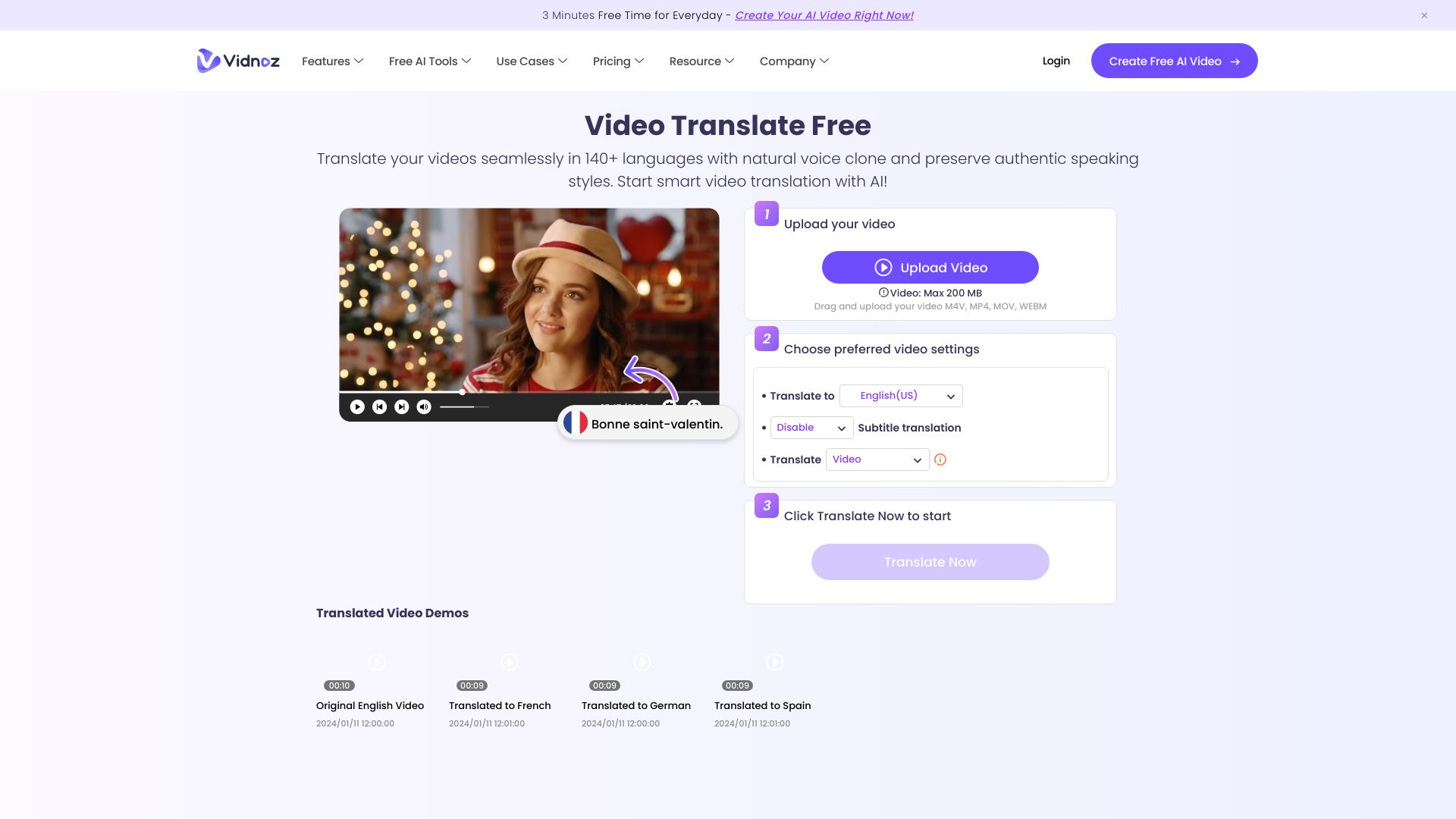
The strongest match for this search is the tool that actually treats translation as a core video workflow. Vidnoz AI combines AI video translation with lip-sync, then adds avatar and template-based video generation for teams that need to create new localized assets as well as adapt existing ones. Support for more than 140 languages gives it a much wider operating range than the typical avatar-only platform.
Its positioning also makes the product useful beyond one-off experiments. The listed free allowance is 3 minutes per day, and the platform includes natural voice cloning and lip-sync in its access description. That makes it a practical first stop for businesses comparing the best ai video translator for businesses, provided the 30-second free translation limit does not block your test workflow.
My take: Vidnoz AI is the easiest recommendation when translation, voice, and lip-sync need to live in the same workflow. The combination of broad language coverage and video creation is unusually well aligned with the keyword.
Where it falls short: Free translation is limited to the first 30 seconds of a video. You will need to check the paid tiers carefully if your projects regularly exceed that limit.
Key features
AI video translation with lip-sync.
Translation support for 140+ languages.
Natural voice cloning and lip-sync in the listed free access description.
AI video generation with avatars and templates.
Pros
Directly addresses video localization rather than only generating new footage.
Broad language coverage for international content.
Flexible enough for translated videos and avatar-led creation.
Cons
The free translation allowance is limited to the first 30 seconds.
Larger translation jobs require a closer look at current plan limits.
Choose Vidnoz AI if: You are a business or content team that needs multilingual video translation with lip-sync and the option to create avatar videos.
2. Media AI Generator

Media AI Generator
Best free starting point for content creators
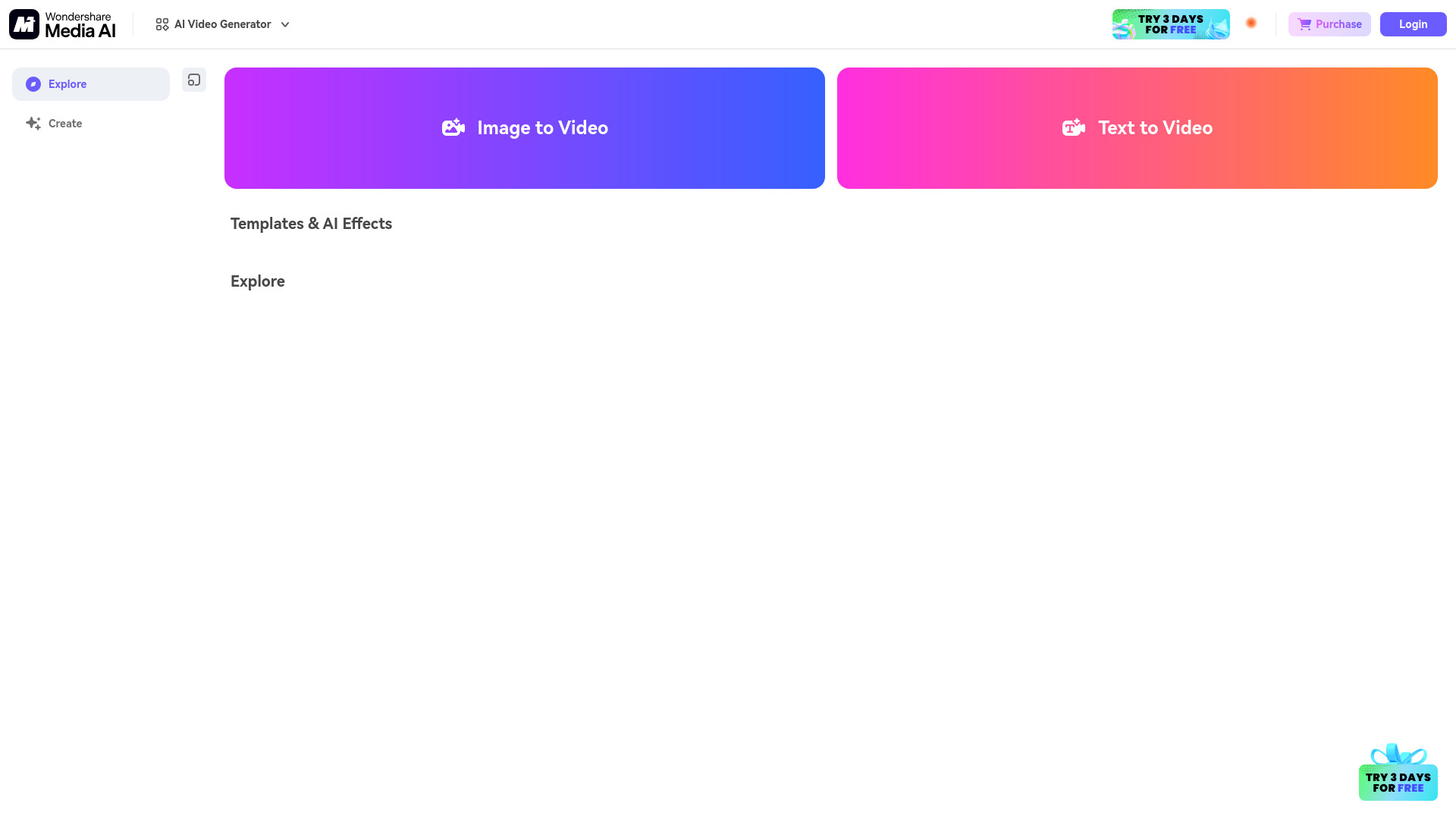
Media AI Generator takes a broader route than a dedicated translator. Its appeal is the ability to work across AI video, image, and audio generation from one online tool, which can be useful when a localized video needs new visual assets rather than a literal translation of an existing clip. For creators, that breadth reduces the need to jump between separate generators during early production.
The free positioning is attractive for testing, but the product draws a clear line around VIP features. Pricing is hidden behind the workflow rather than presented here as a clean starting figure, so teams should confirm what the free experience includes before building a repeatable process around it. This is better viewed as an adjacent option for generating language-specific content than as a specialist translator.
My take: I would try Media AI Generator when the project mixes video, image, and audio creation. It is less compelling when the non-negotiable requirement is accurate translation of a finished video.
Where it falls short: VIP features require payment, and the available starting-price information is not clear enough to compare directly with the other picks.
Key features
AI video generation.
AI image generation.
AI audio generation.
Diverse AI effects and styles are listed in its free access description.
Pros
Free access makes initial exploration straightforward.
Covers video, image, and audio generation in one service.
Strong fit for creators assembling fresh localized content.
Cons
VIP features require payment.
It is an adjacent video creation tool, not the clearest dedicated translation choice.
Pricing needs to be verified before purchase.
Choose Media AI Generator if: You create multilingual social or marketing assets from scratch and want video, image, and audio generation together.
3. Digen AI

Digen AI
Best free image-to-video option for creators

Digen AI is an interesting choice when localization begins with still images, product artwork, or character frames. Its free AI video generator turns images into videos and lists realistic lip-sync plus multilingual support, giving it a more relevant connection to translation than a generic text-to-video service. That combination is particularly useful for creators who want a visual asset to speak or perform in multiple languages.
The product is free to use, which makes it easy to test a short concept before committing budget. Still, the workflow is image-led rather than clearly focused on importing and translating an existing long-form video. Treat it as a flexible multilingual creation tool, and verify its current pricing and limits before using it for a production pipeline.
My take: Digen AI earns its high placement because lip-sync and multilingual support make the image-to-video workflow unusually relevant here. It is a smart experiment for creators, but not a substitute for a full translation studio in every project.
Where it falls short: The exact current pricing and workflow limits need checking before commitment. Buyers should also confirm that the image-first process matches their source material.
Key features
Free AI video generation.
Image-to-video transformation.
Realistic lip-sync.
Multilingual support.
Pros
Free to use.
Connects image-to-video creation with lip-sync.
Multilingual support gives it a clear localization angle.
Cons
The workflow centers on images rather than clearly documented finished-video translation.
Current pricing and limits should be confirmed before scaling.
Choose Digen AI if: You are a creator starting with images and need free image-to-video experiments that can support lip-sync and multiple languages.
4. AI STUDIOS

AI STUDIOS
Best multilingual avatar studio for educators
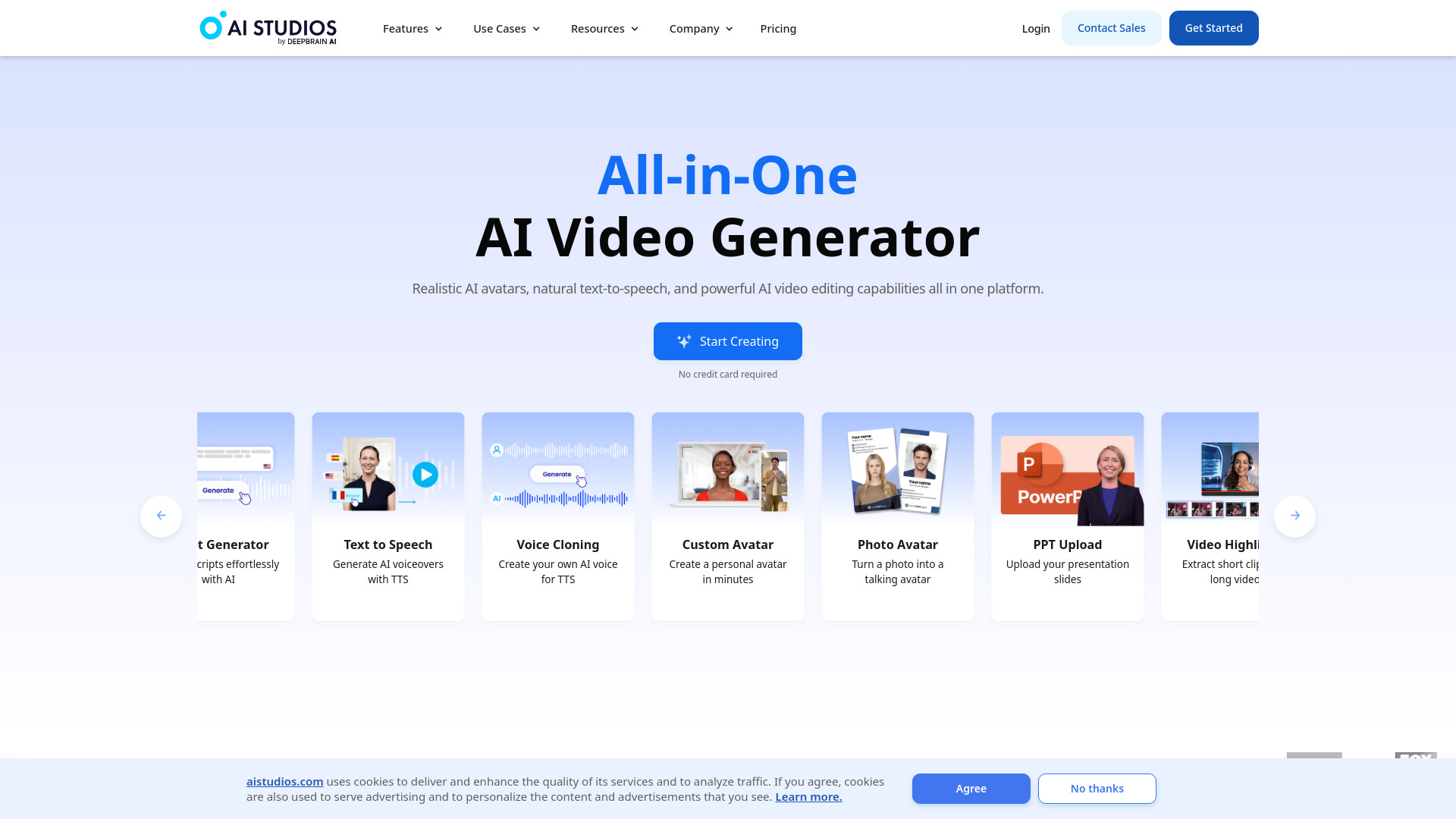
For lessons, explainers, and internal training, AI STUDIOS has a more obvious use case than many of the general-purpose generators in this list. It combines video creation and editing with 150+ realistic digital avatars and AI voices in more than 80 languages. That gives educators and learning teams a repeatable way to produce presenter-led versions of a script without recording every language themselves.
The free plan includes three video exports per month, so it is enough for a controlled test rather than a high-volume publishing schedule. The platform is strongest when you are generating a new avatar presentation from text. If you need to translate a real speaker while preserving the original performance, confirm that the exact workflow is supported before signing up.
My take: AI STUDIOS is the most convincing pick for structured educational video. The avatar and language combination is practical, though the free export ceiling arrives quickly for active teams.
Where it falls short: The free plan limits video exports and features. That makes the free tier useful for evaluation, not necessarily for regular production.
Key features
More than 150 realistic digital avatars.
AI voices in 80+ languages.
AI video generation from text.
All-in-one video creation and editing platform.
Pros
Strong fit for lessons, training, and presenter-led explainers.
Broad avatar selection.
Multilingual voice support is clearly stated.
Cons
Free users receive only three video exports per month.
Translation of an existing real-speaker video should be verified separately.
Choose AI STUDIOS if: You are an educator or training team that wants multilingual avatar videos from scripts rather than a traditional dubbing workflow.
5. Veo3 AI

Veo3 AI
Best high-resolution adjacent generator for creators
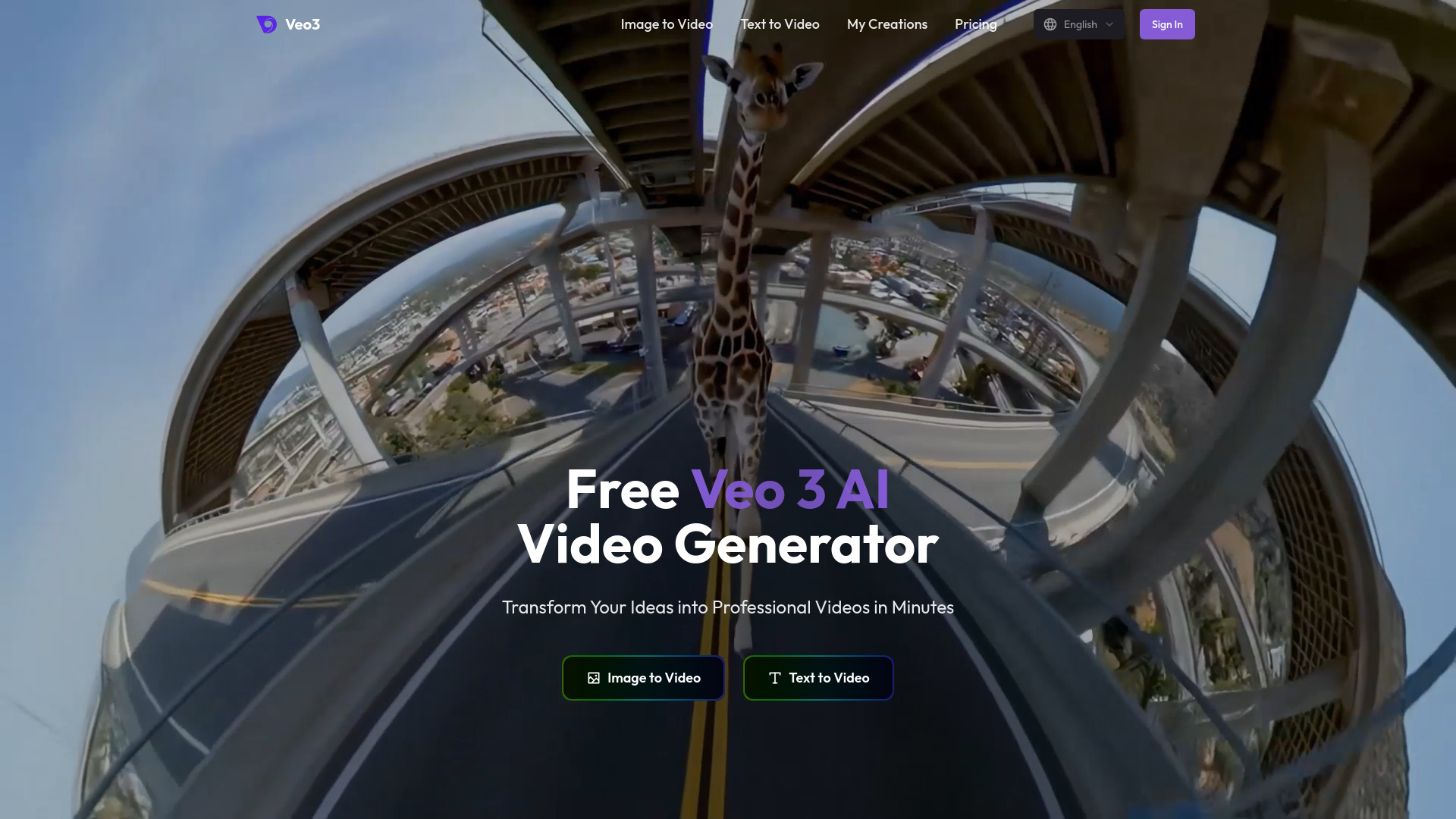
Veo3 AI belongs in this comparison as a broader visual studio rather than a dedicated translator. It generates video from text and images, which can help a creator rebuild a campaign in different languages by changing the prompt or source assets. The service advertises 4K video output on its homepage, and its listed paid plans also include 1080p output language, so resolution deserves careful scrutiny.
The free-to-start entry point is useful for testing the text-to-video and image-to-video workflow. The listed pricing includes a Mini Plan at $15 per month, while another product description references $9 per month for 200 credits. Because those figures do not line up cleanly, verify the live plan page before comparing cost per finished clip.
My take: Veo3 AI is worth considering when localization means creating new visuals rather than translating dialogue. I would not choose it as the first tool for a finished multilingual video without confirming its translation capabilities.
Where it falls short: The homepage's general 4K claim conflicts with the 1080p resolution specified for paid plans. Pricing references also need confirmation.
Key features
AI video generation from text.
AI video generation from images.
4K video output is stated on the homepage.
Free-to-start access.
Pros
Flexible text-to-video and image-to-video inputs.
Useful for producing fresh visual variants.
A clear paid entry point is listed, even though other pricing references differ.
Cons
Resolution claims are inconsistent between the homepage and paid-plan description.
It is not presented as a dedicated video translation platform.
Choose Veo3 AI if: You need to generate new visual scenes for localized campaigns and are willing to verify the final resolution and credit economics.
6. V03AI

V03AI
Best experimental Veo-powered option for individuals
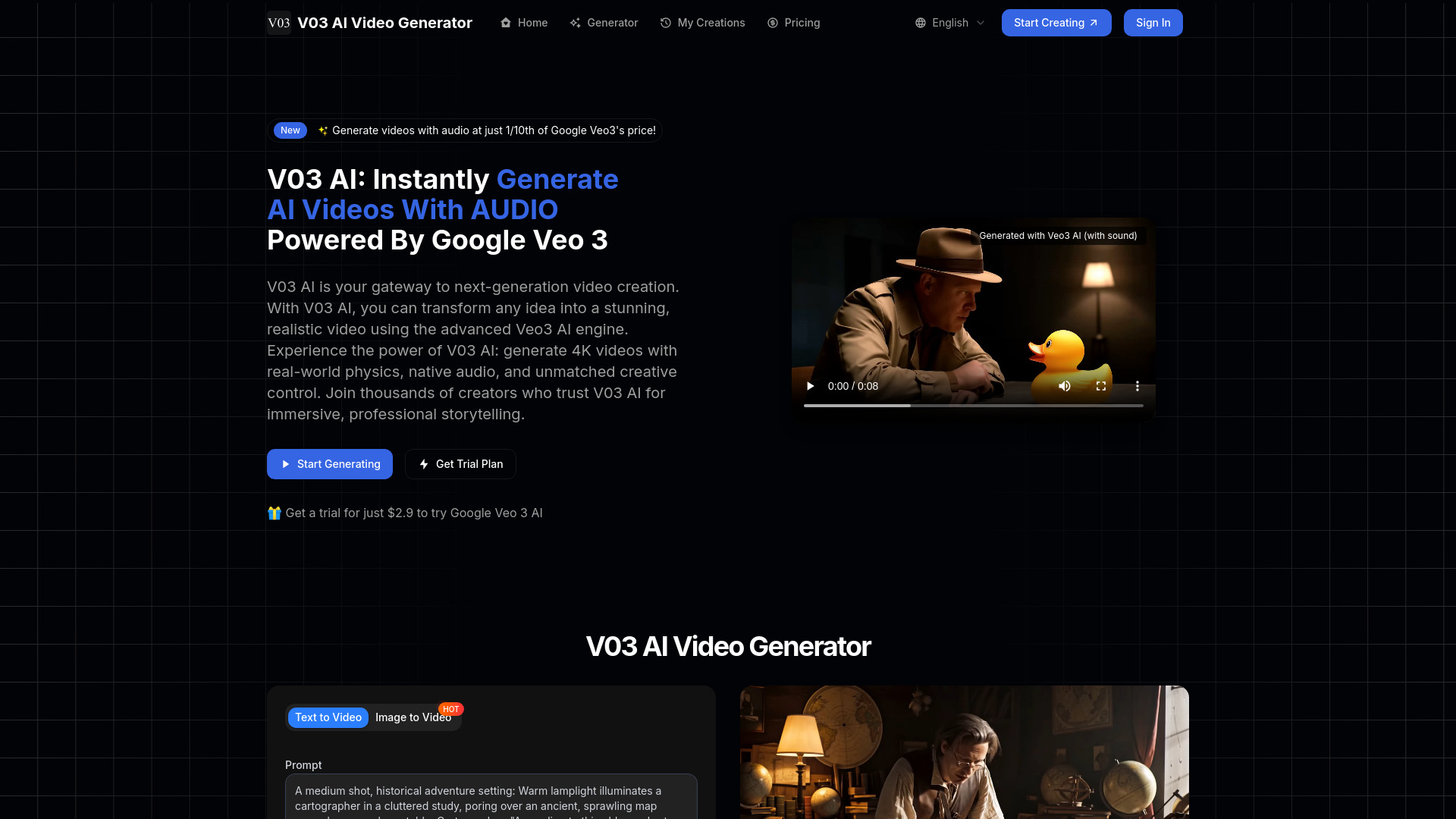
V03AI focuses on text-to-video and image-to-video generation and is described as being powered by Google Veo 3 AI. That makes it relevant for individual creators who want to explore realistic video creation with the possibility of audio. The one-time 50-credit allowance gives a prospective user a concrete way to test the workflow before choosing a recurring plan.
There is an important caveat for anyone considering this as a localization tool: audio generation remains experimental. Sound may not always be included, particularly in fast mode. That makes V03AI better for visual prototyping or short creative tests than for dependable multilingual delivery where every output needs a predictable soundtrack.
My take: The low trial price and one-time credits make this an accessible sandbox. I would keep it in the shortlist for visual generation, but not rely on experimental audio for client-facing translated videos.
Where it falls short: Audio generation is experimental, and sound may be omitted, especially in fast mode. That uncertainty matters for any video translator workflow.
Key features
Text-to-video generation.
Image-to-video generation.
AI video generation with audio is listed.
Google Veo 3-powered generation is part of its positioning.
Pros
Offers a low-cost trial entry point.
Supports both text and image inputs.
Useful for individual creators testing realistic video concepts.
Cons
Audio may not be included in every generation.
Fast mode can be particularly inconsistent for sound.
The service requires careful testing before multilingual production use.
Choose V03AI if: You are an individual creator exploring text-to-video and image-to-video with experimental audio rather than managing a finished translation pipeline.
7. Flow AI

Flow AI
Best cinematic generator for content creators
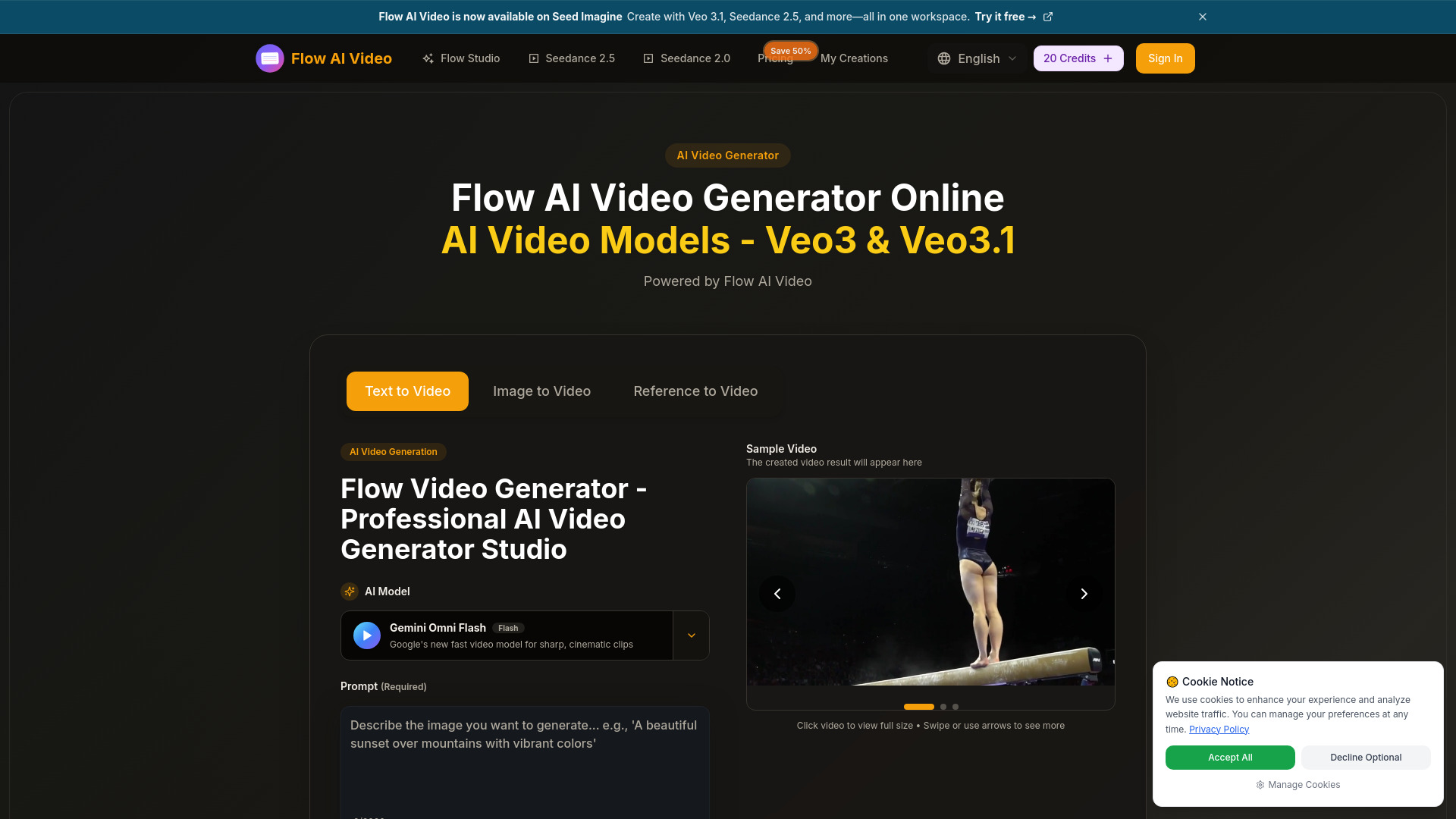
Flow AI approaches the problem from a storytelling angle. It supports text-to-video and image-to-video generation, with cinematic multi-shot storytelling and up to 4K video quality listed in its access description. For a creator developing separate language versions of a concept, that multi-shot orientation may be more useful than a single talking-head clip.
The catch is the credit model. Video generation requires credits, and the Basic plan is listed at $19.90 per month. That is not necessarily a problem, but buyers should estimate how many iterations a project needs before treating the headline price as the true cost. Flow AI is an adjacent production tool, not a direct replacement for a service that translates an existing speaker.
My take: Flow AI is the most interesting pick here for cinematic, multi-scene creative work. It is less suited to straightforward dubbing or lip-synced translation.
Where it falls short: Credit-based generation can make experimentation expensive, especially for projects that require many revisions. Translation of existing videos is not its defining feature.
Key features
Text-to-video generation.
Image-to-video generation.
Cinematic multi-shot storytelling.
Up to 4K video quality is listed.
Pros
Supports both text and image inputs.
Strong fit for multi-shot visual concepts.
Free trial credits let creators test the workflow.
Cons
Video generation requires credits.
The Basic plan starts at $19.90 per month.
It is better understood as a generator than a dedicated translator.
Choose Flow AI if: You are creating cinematic multilingual concepts from prompts or images and can work within a credit-based production model.
8. Novi AI

Novi AI
Best one-click text-to-video workflow

Novi AI is designed around speed and automation. Its listed capabilities include text-to-video generation, one-click automation for video creation, multiple video styles and sizes, and AI story or novel-to-video conversion. That makes it a practical option when the goal is to turn localized copy into a draft quickly, especially for creators producing multiple versions of a concept.
It also supports video generation from text and images and references multiple languages and advanced models in its positioning. However, the product is still best framed as a creation tool. Pricing is not clear enough here to make a reliable cost comparison, and buyers should validate the exact language, export, and usage limits for their intended workflow.
My take: Novi AI is appealing for high-volume ideation and quick story drafts. It becomes less convincing when a buyer needs precise control over an existing video's translated voice and lip movements.
Where it falls short: Current product fit, pricing, and workflow limits should be checked before commitment. The one-click pitch may not replace a more controlled editing process.
Key features
AI video generation from text.
One-click automation for video creation.
Multiple video styles and sizes.
AI story and novel-to-video workflows.
Pros
Fast route from text to a video draft.
Supports multiple styles, sizes, and languages in its positioning.
Useful for creators testing several concepts.
Cons
Pricing is not presented as a clean starting figure.
The automated workflow may offer less control than a dedicated editor.
Translation and export limits require confirmation.
Choose Novi AI if: You want to turn localized scripts or stories into quick video drafts with minimal manual setup.
9. Lanta AI

Lanta AI
Best flexible multi-input generator
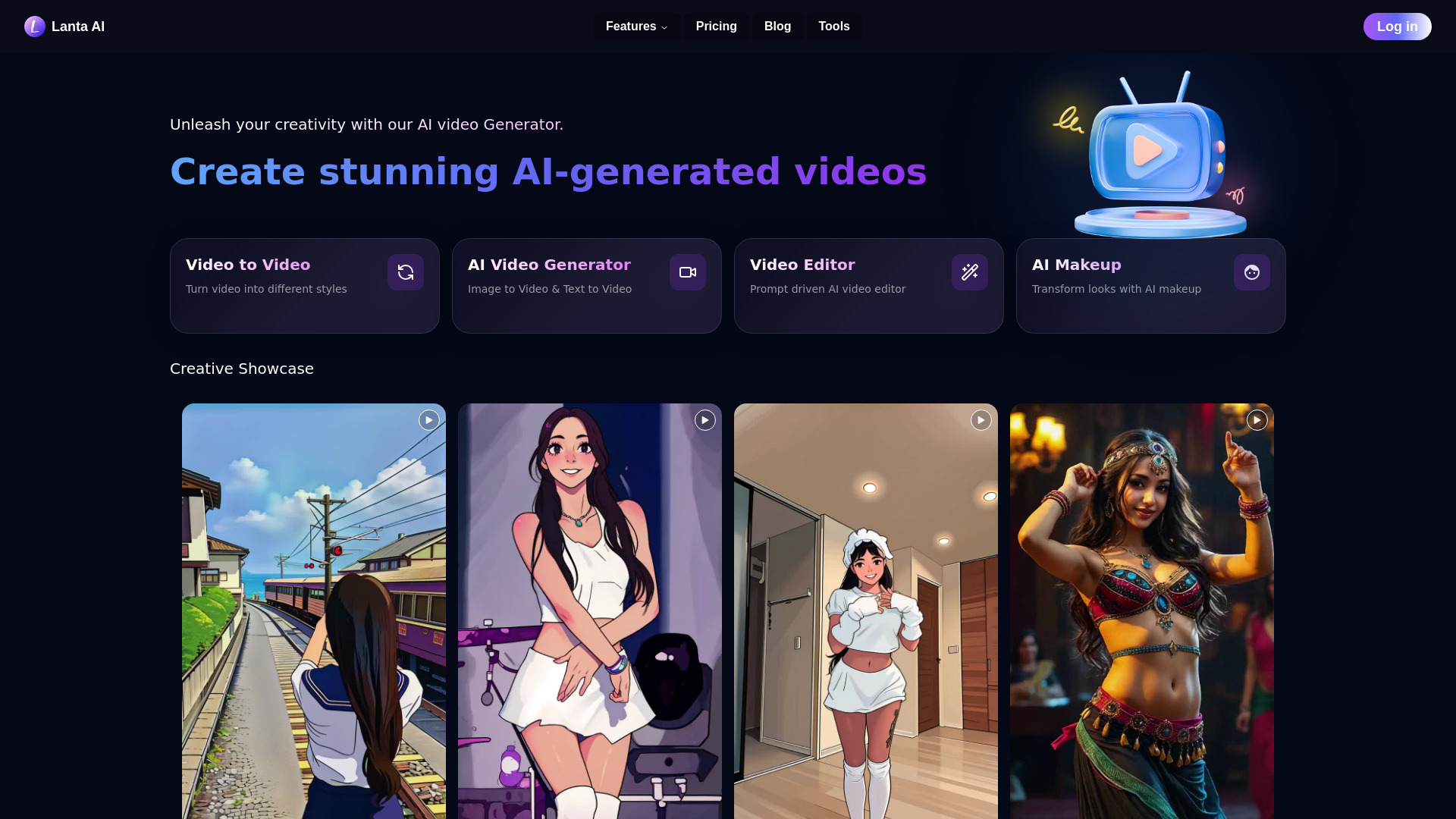
Lanta AI gives creators three useful starting points: video-to-video, image-to-video, and text-to-video. That input flexibility makes it one of the more interesting adjacent tools for localization experiments. A team can begin with existing footage, a still image, or a translated prompt instead of forcing every project into one production path.
The free tier includes 40 credits, while the listed Standard price is $6 per month. Those numbers make Lanta AI approachable for small tests, but credits still determine how much actual output the plan supports. If you are evaluating it as the best ai translator tool for video editing, confirm whether its video-to-video workflow preserves the elements you need, because the available feature description does not establish a full translation and lip-sync pipeline.
My take: Lanta AI is a good low-cost place to explore multiple video inputs. Its flexibility is more persuasive than its translation credentials, so I would test a representative clip before adopting it for localization.
Where it falls short: The free tier has limited credits. The product's video-to-video capability should not automatically be treated as full video translation.
Key features
Video-to-video conversion.
Image-to-video generation.
Text-to-video generation.
40 credits in the listed free access.
Pros
Supports three useful content inputs.
Low listed monthly starting price.
Suitable for creators comparing different generation approaches.
Cons
Free credits are limited.
Video-to-video does not by itself confirm translation or lip-sync support.
Choose Lanta AI if: You want an affordable way to test video-to-video, image-to-video, and text-to-video workflows before choosing a specialized translator.
10. AI Image to Video

AI Image to Video
Best beginner image-to-video entry point
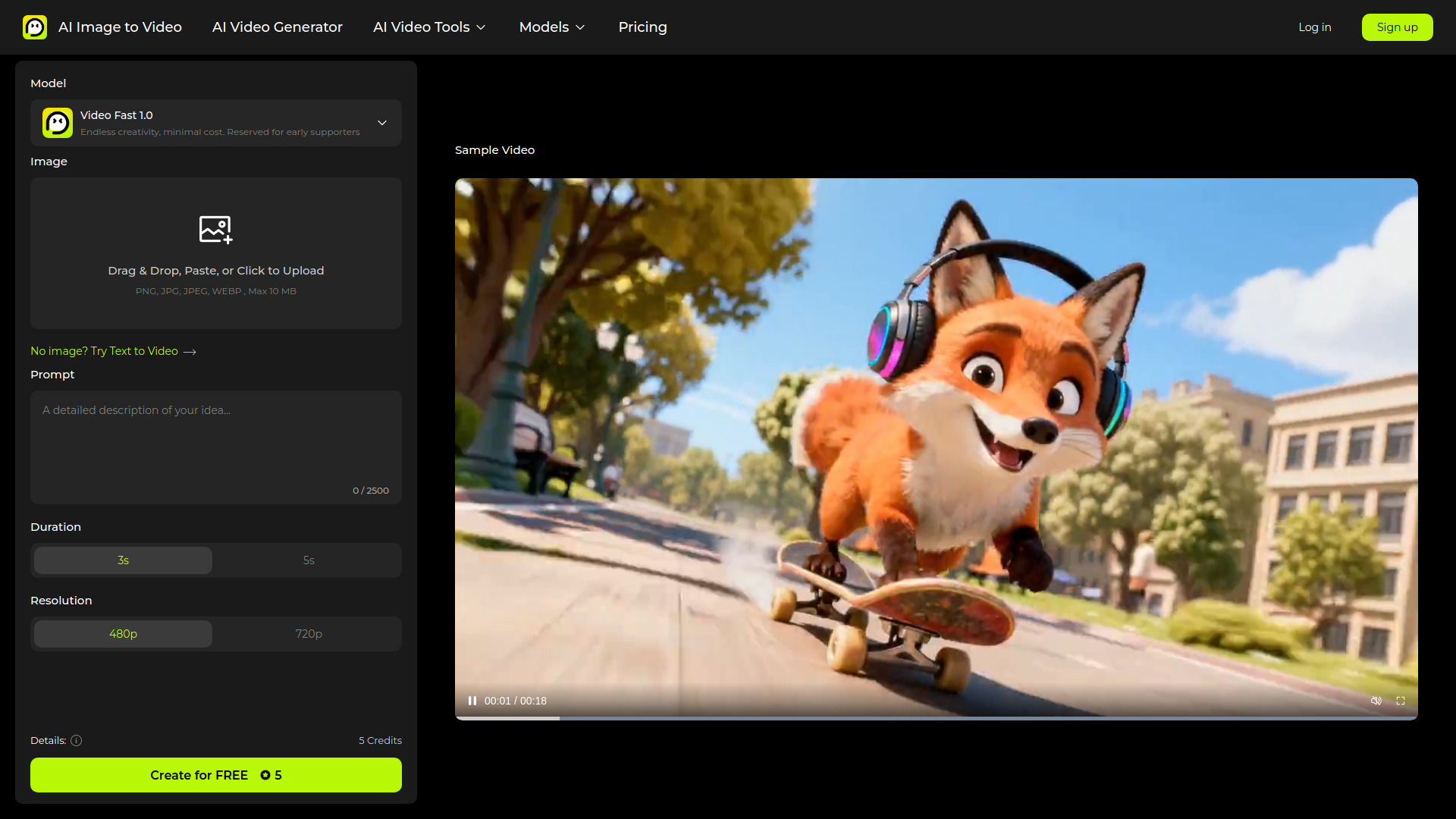
AI Image to Video keeps its promise narrow and understandable: convert images into videos using advanced models. The free plan includes daily credits, and the service lists HD output without watermarks on paid plans plus multi-model access. For a beginner building visual versions of translated campaign assets, that is a less intimidating starting point than a full production suite.
This is another adjacent option rather than a direct translator. It can help turn language-specific stills into motion content, but the feature list does not establish voice translation, dubbing, or lip-sync. Registration is required to use the free features, so the testing process has one extra step even before you assess output quality.
My take: This is the pick I would give to a beginner who already has images and wants a simple, inexpensive way to animate them. It should not be your first choice for translating a talking-head video.
Where it falls short: Free features require account registration. Its image-to-video focus leaves the core audio and dialogue translation problem unresolved.
Key features
Free image-to-video generation with daily credits.
HD video output without watermarks on paid plans.
Multi-model access.
Standard plan listed at $5.99 per month.
Pros
Clear, beginner-friendly workflow.
Daily free credits provide a way to test the product.
Low listed paid entry point.
Cons
Account registration is required for free features.
Not presented as a voice, dubbing, or lip-sync translator.
Image input is the central workflow.
Choose AI Image to Video if: You are new to AI video and want to animate still assets for localized content at a low listed starting price.
More tools to compare

JXP AI Video Generator
Text-to-video and image-to-video creation

VO3 AI
Cinematic AI video generation
AI Video Translator
Creators needing lip-synced video translation

VIDEOAI.ME
AI video ads with realistic actors

VideoAI
Multi-model AI video creation

Pixwith AI
Multi-model AI video creators

Gemini Omni AI Video Generator
Cinematic AI video generation


wan ai video generator
Open-source video generation


InfiniteTalk AI
Long-form AI video dubbing


Omni AI Video
Text- and image-to-video creators


Voor AI
Text-to-video and image generation

Veo 3.1 AI Video Generator
Cinematic AI video generation

AI Studio for Video
Creators comparing AI video models

VideoTube
Creators making AI videos from text or images

Veo 3 AI Video Generator
Cinematic videos with synchronized audio

Genmi AI
AI video and image generation

AI Video API
AI video API integrations

Infinite Talk AI
Long-form talking avatar videos


img2.ai
Image-to-video creators

Kling AI Video Generator
AI video creators needing motion control

veo 3.1
Cinematic video with native audio
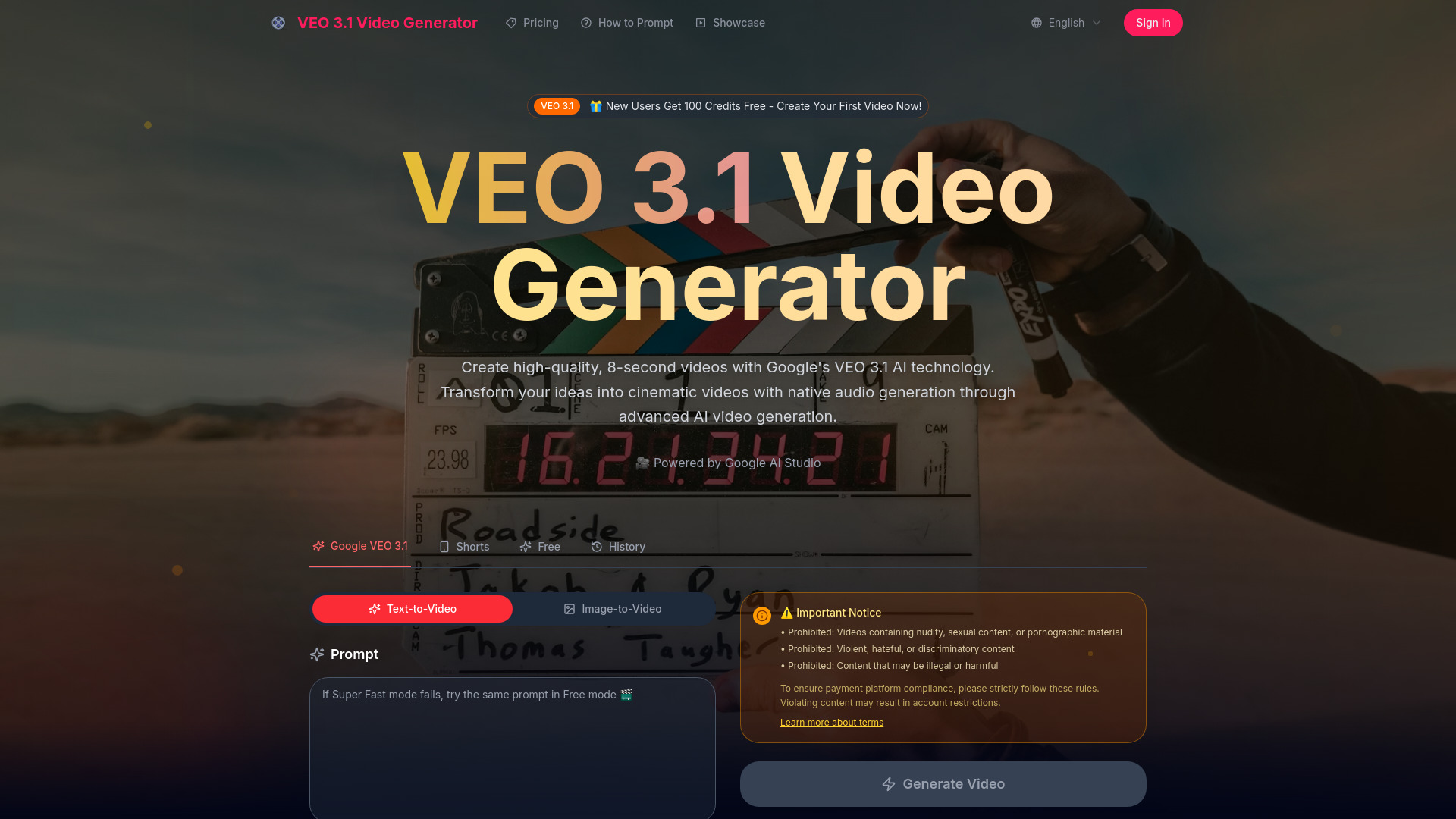

Veo Ai
Cinematic AI video creation
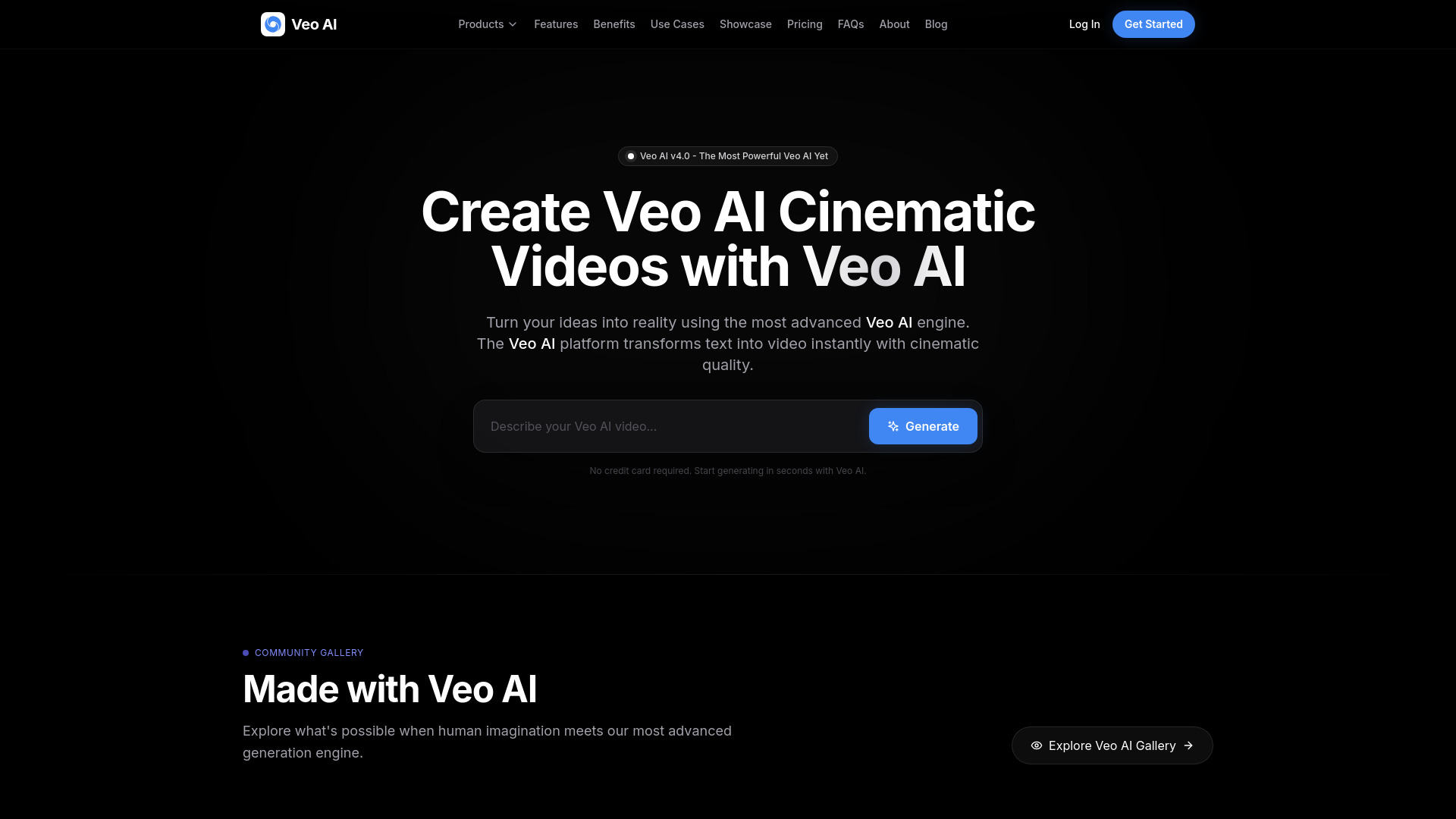

Ray3 Video AI
Professional HDR video generation
Veo 3 AI
Video creators needing synced audio

ImageToVideoAI
Image-to-video creators

Videoall.ai
Comparing AI video models


Auralume AI
Text-to-video and image-to-video creation

image to video ai
Image-to-video creators
Veo 3.1
Cinematic AI video generation

Vidthis AI
Open-source video creators
ImagetoVideoAI
Multi-model AI video generation
VEO 3.1
Cinematic 1080p video generation

Video Maker AI - Video generation
Text-to-video and image-to-video creators

S02AI
AI video creation with Sora2 and synchronized audio

Wan2.5 AI Video Studio
1080p videos with native audio

X-Me AI
Multilingual AI avatar videos

Omni AI
Fast text-to-video creation


Vidthis: All In One AI Video Generator
Creators needing multiple video and image models
Dream Machine AI
Realistic text-to-video creation


ImgToVid AI
Image-to-video creators

Veo3
Cinematic video with synchronized audio

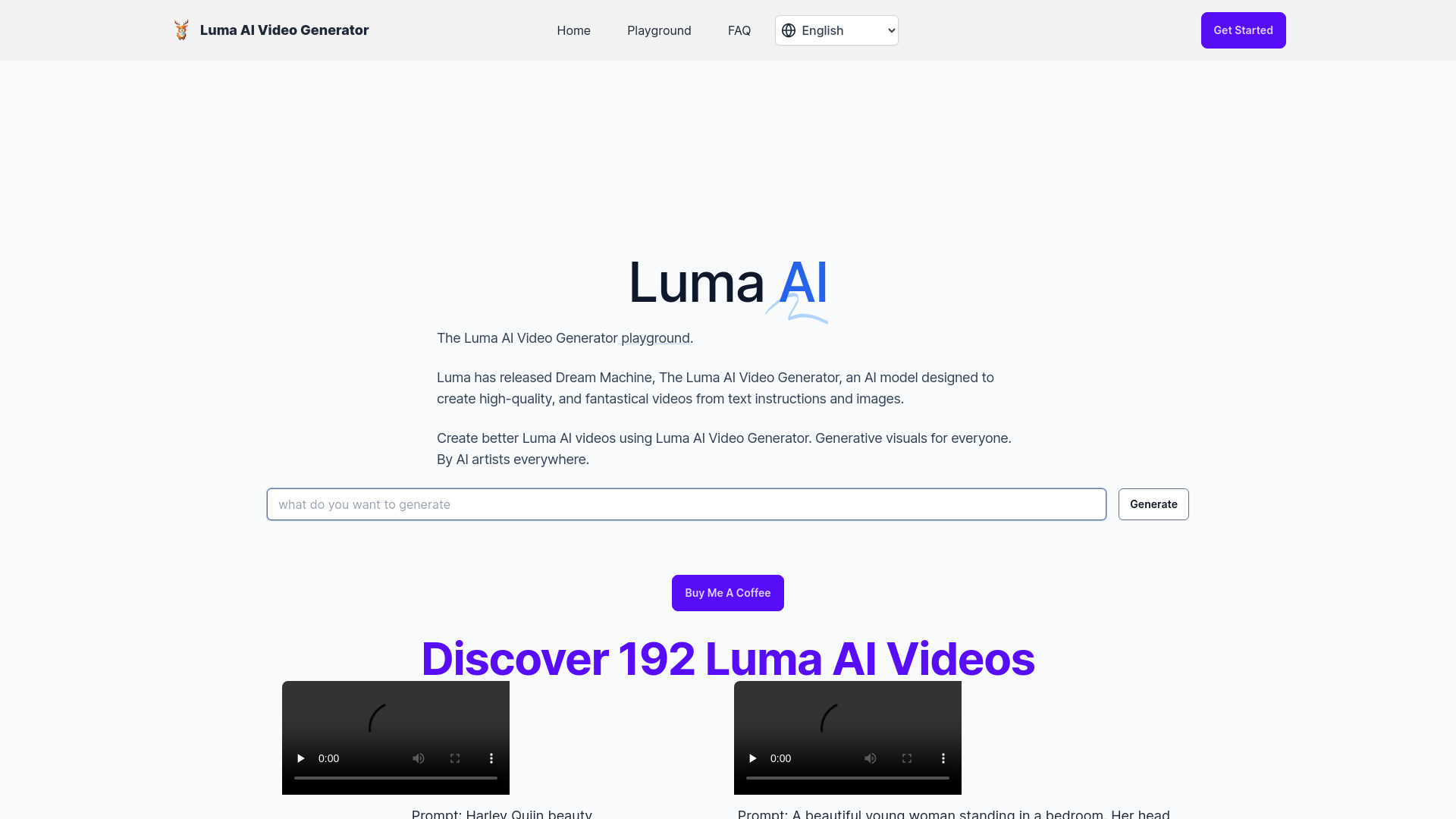
Luma AI Video Generator
Realistic text-to-video clips

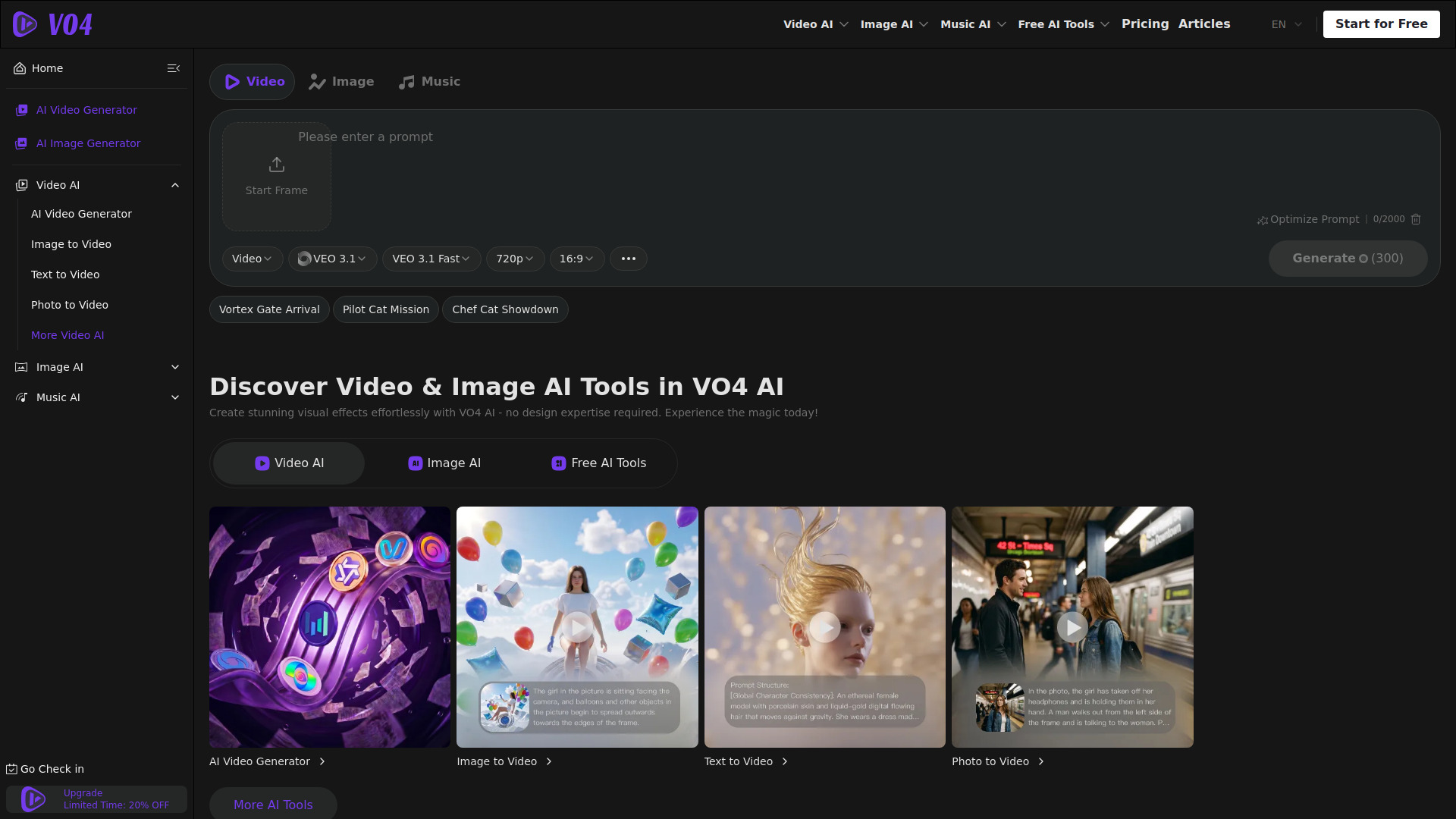
VO4 AI Video Generator
Multi-model AI video generation

Verbalia
Multilingual e-learning video instructors


ClipVideo AI
Product videos for marketers and creators

Kling AI
Cinematic text-to-video generation


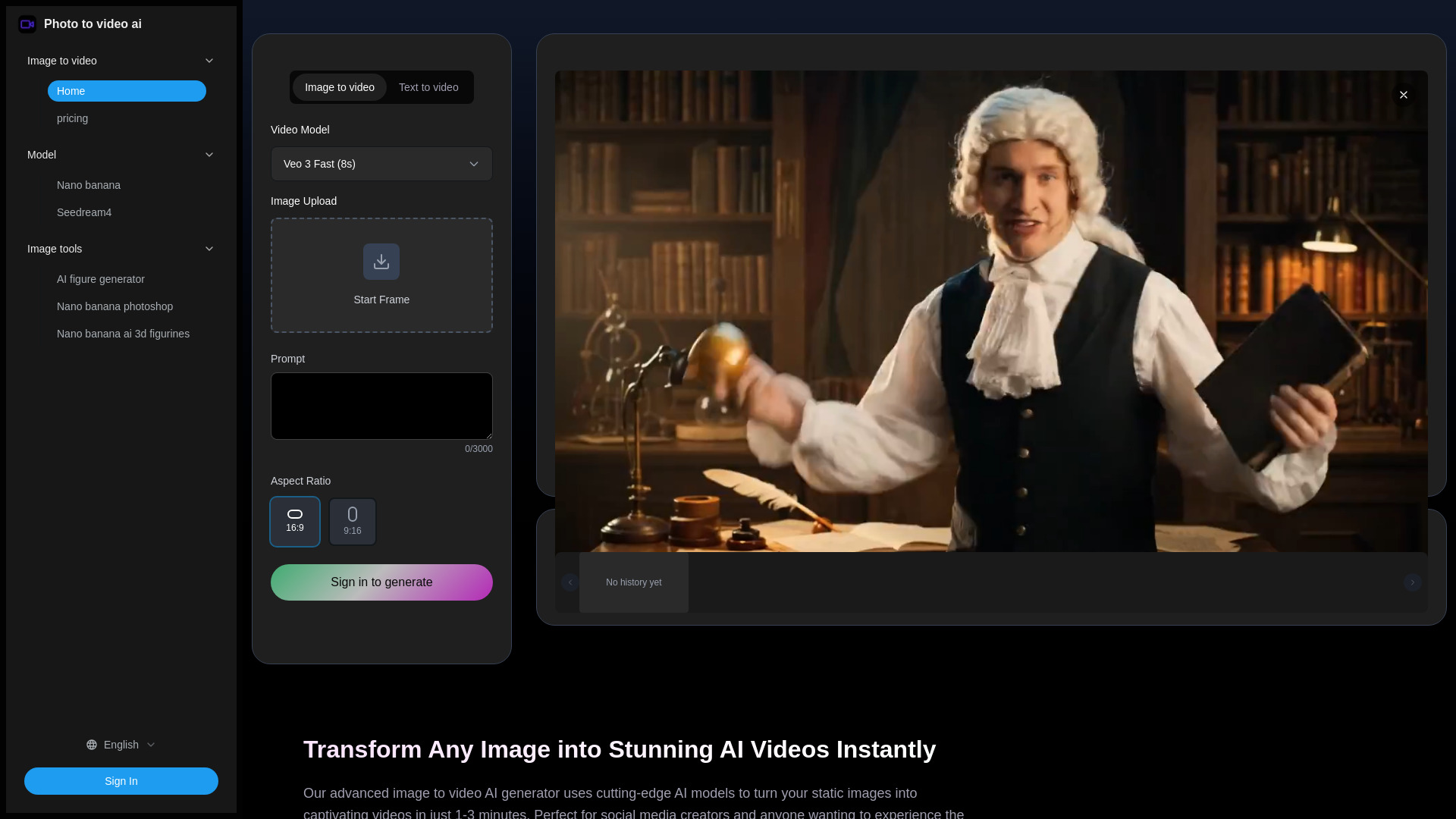
Photo to video ai
Turning photos into social videos

Wan 2.7 AI Video Generator
Photo-to-video creators and AI avatar marketers


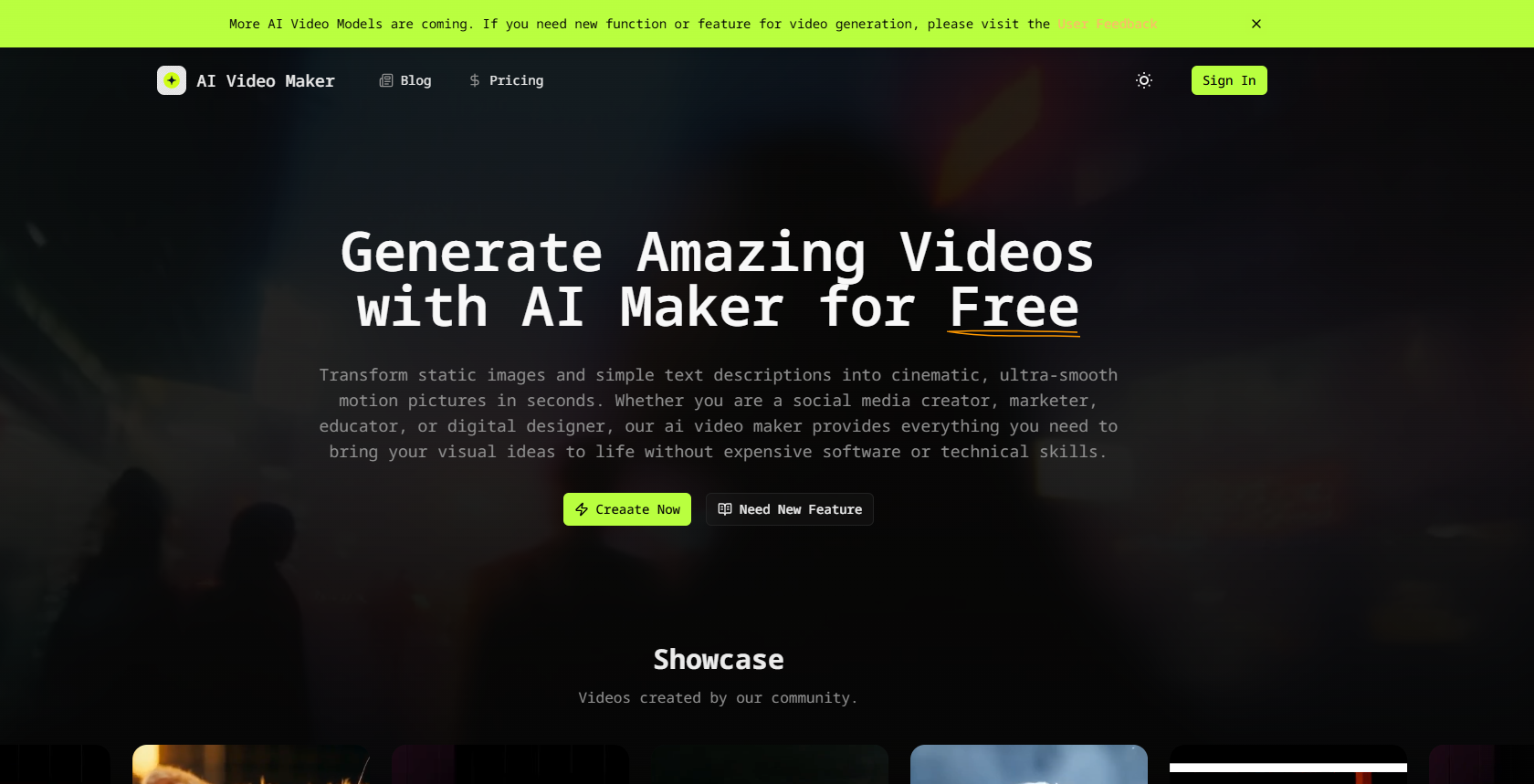
AI Video Maker
Image-to-video creators

BlitzVideo
Text-to-video content creation

Wan 2.5 AI
Audio-synchronized video generation


Ray 2
Realistic text-to-video creation


TEXT VIDEO ai
Faceless social video creators

AI Sora 2 Video
Photorealistic AI video with synchronized audio

MakeAIVideo
Creators making AI videos and images
Veo 3 AI
AI video generation for creators and marketers

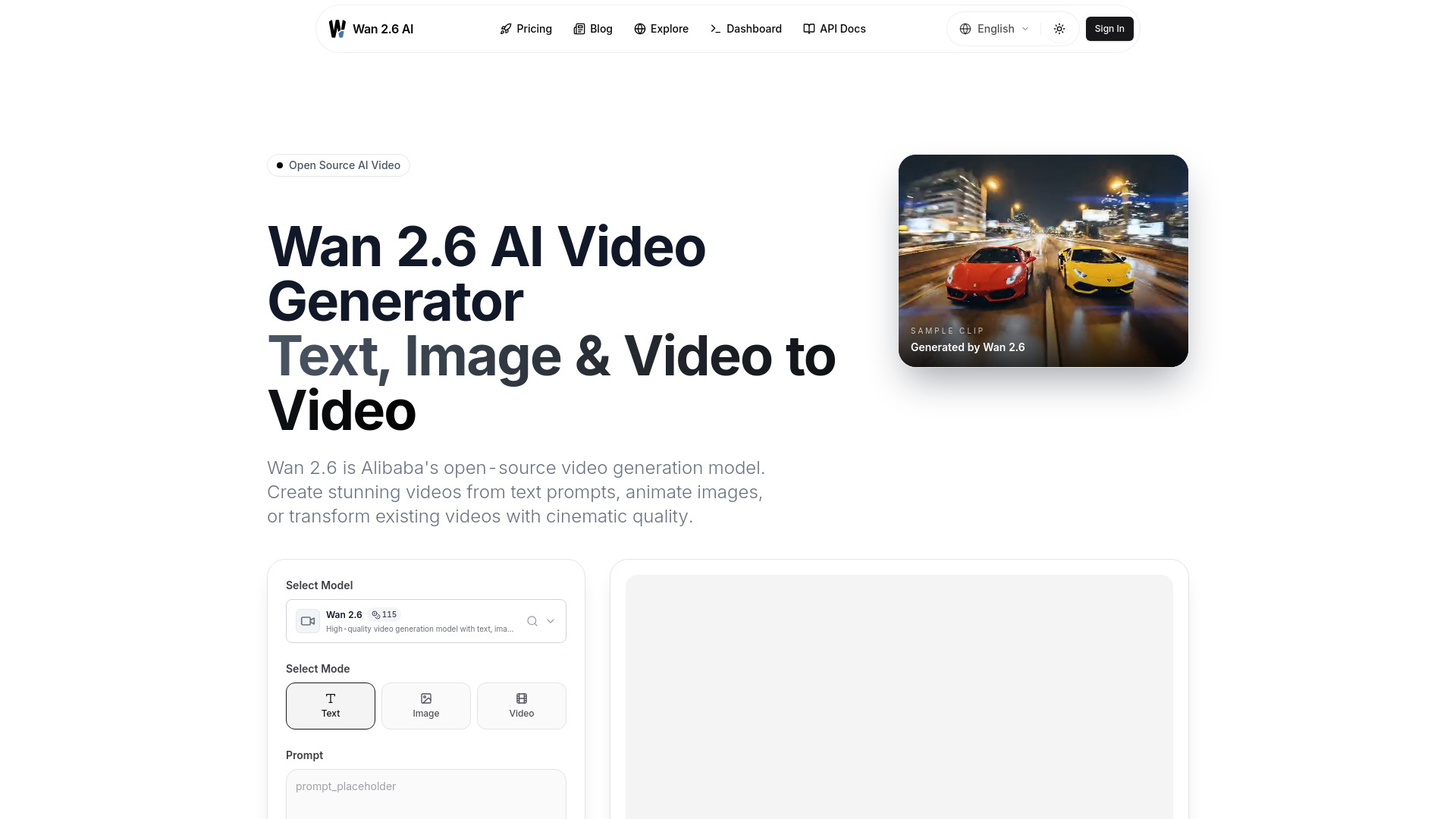
Wan 2.6 AI
Text, image, and video-to-video creators

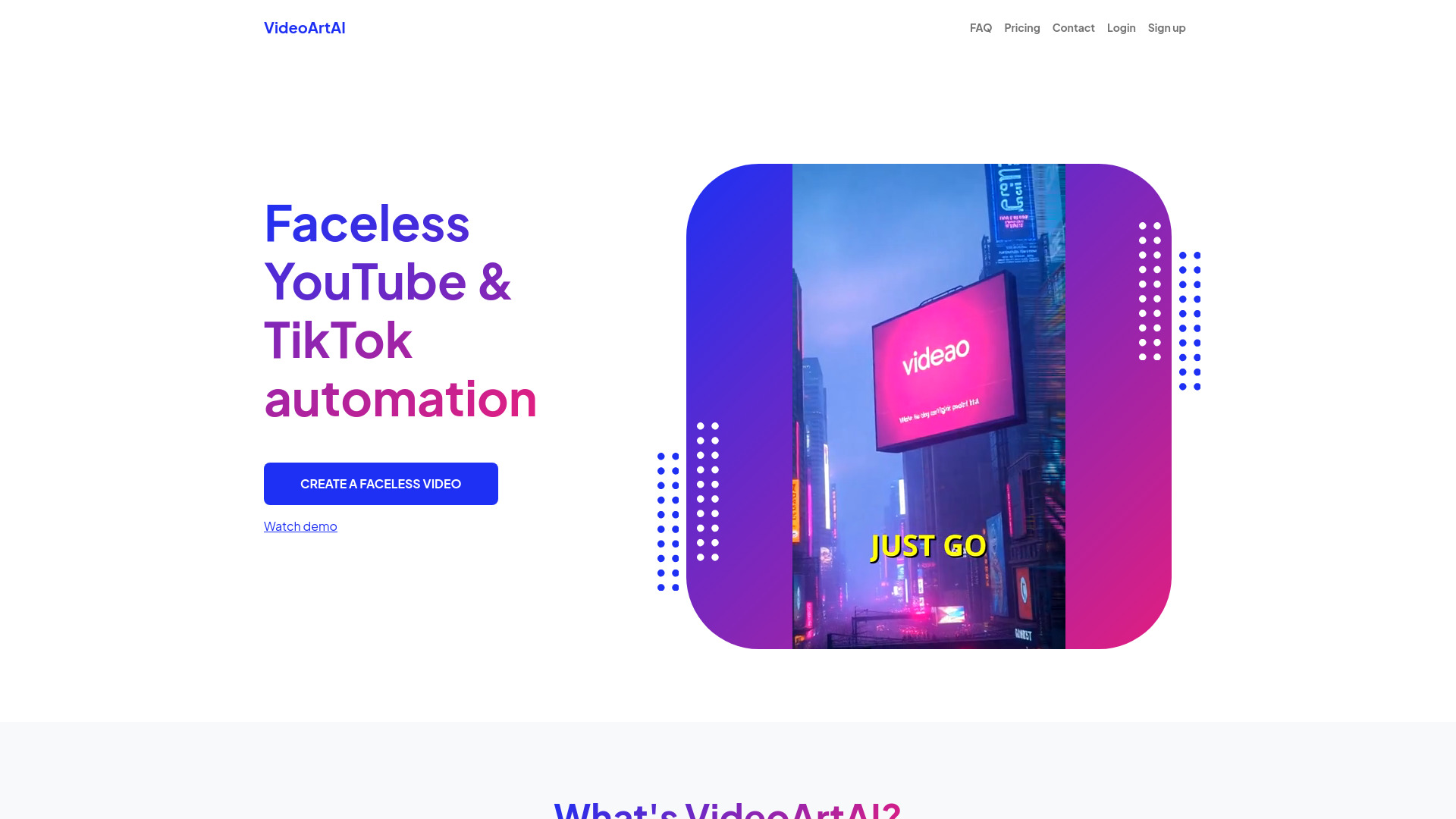
VideoArtAI
Faceless YouTube and TikTok creators

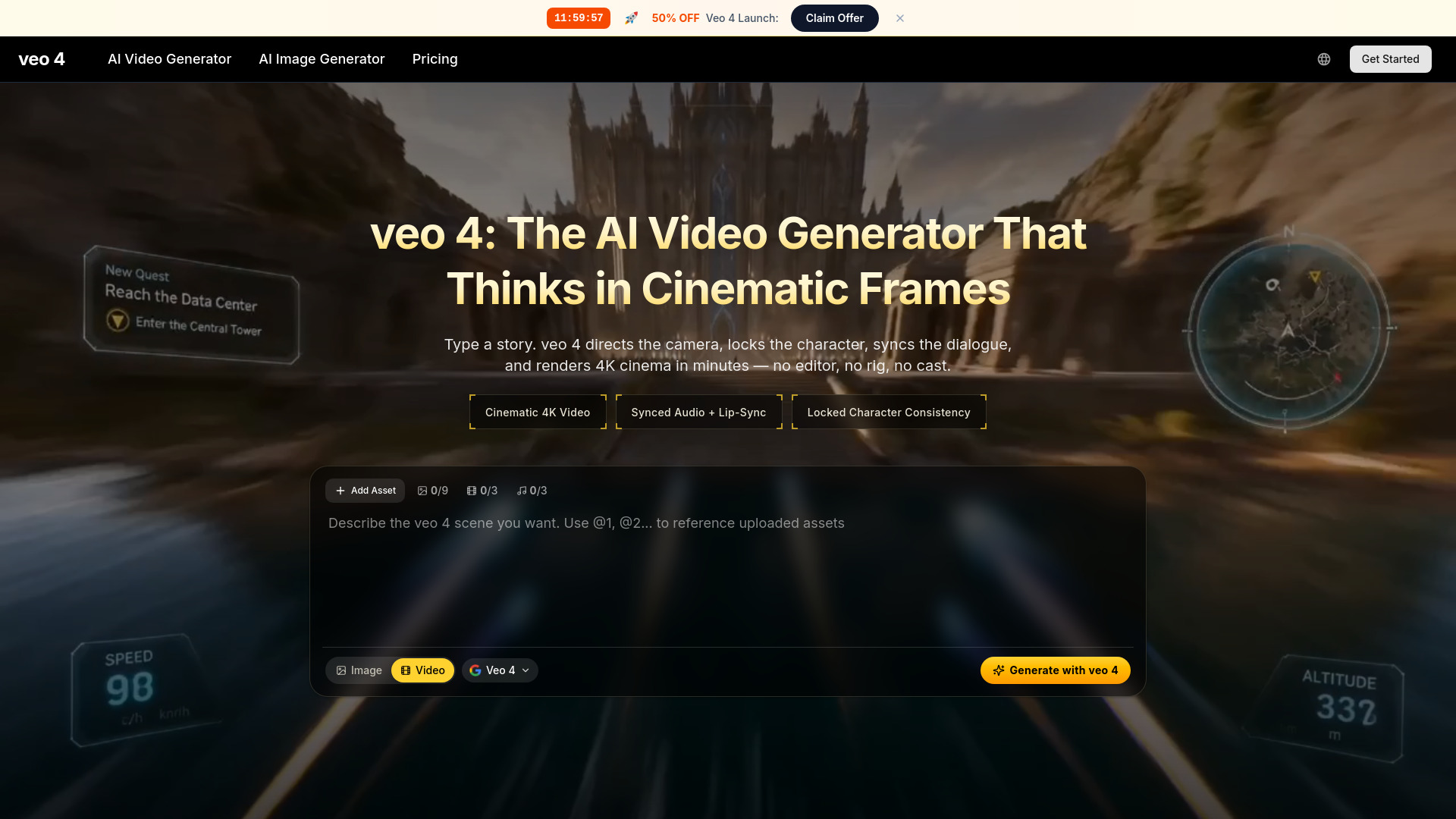
Veo 4 AI Video
Cinematic AI video creators
Which AI video translator should you choose?
Start with the source material, not the marketing label. If you already have a finished video and need another language, Vidnoz AI is the obvious first test because it explicitly combines video translation, lip-sync, and 140+ languages. If you are creating a presenter-led lesson from a script, AI STUDIOS is a better fit because its avatars and 80+ language voices match that workflow.
For creators building new visual content, the choice shifts. Digen AI works well for image-led experiments with lip-sync and multilingual support. Lanta AI is more flexible across video, image, and text inputs. Flow AI and Veo3 AI make more sense for cinematic or prompt-driven generation, while AI Image to Video is the simplest beginner route.
| Your situation | Start here | Why |
|---|---|---|
| Translate an existing video | Vidnoz AI | Direct video translation, lip-sync, and 140+ languages |
| Create multilingual avatar lessons | AI STUDIOS | 150+ avatars and voices in 80+ languages |
| Turn images into speaking videos | Digen AI | Image-to-video, realistic lip-sync, and multilingual support |
| Generate cinematic scenes | Flow AI | Text/image inputs and multi-shot storytelling |
| Test several input types cheaply | Lanta AI | Video-to-video, image-to-video, and text-to-video |
| Animate still assets as a beginner | AI Image to Video | Daily credits and a focused workflow |
My practical recommendation
For most buyers, test Vidnoz AI first. It is the only featured option whose headline capabilities line up cleanly with the core translation job: multilingual video, lip-sync, and broad language coverage. Use a representative clip rather than a perfect demo. Check pronunciation, timing, voice character, and whether the translated mouth movement remains believable from beginning to end.
If your project is really about generating new language versions from a script, test AI STUDIOS alongside it. Its avatar and voice capabilities may be a better operational fit than translating footage that was never designed for localization. For creators with image-heavy campaigns, compare Digen AI and Lanta AI before paying for a broader suite.
The best ai video translator tool is not necessarily the one with the most generation modes. It is the one that handles your source format, target languages, audio expectations, export requirements, and revision budget without forcing a separate tool into the middle of the workflow.
Common mistakes when choosing an AI video translator
Confusing generation with translation: Text-to-video can create a new clip, but it does not automatically translate an existing speaker or preserve the original performance.
Ignoring the audio workflow: Check whether the tool offers voice translation, cloning, lip-sync, or only silent visual generation.
Testing only a 10-second demo: Short clips hide timing, pronunciation, and consistency problems. Use a realistic sample before committing.
Treating credits as minutes: A low monthly price may still be expensive if each revision consumes credits quickly.
Taking resolution claims at face value: Veo3 AI, for example, has a stated difference between a general 4K homepage claim and 1080p language on paid plans.
Forgetting free-tier restrictions: Vidnoz AI limits free translation to the first 30 seconds, while AI STUDIOS limits free exports to three per month.
Skipping vendor verification: Pricing, language coverage, export limits, and model behavior can change, so confirm them before buying.
What changed in 2026
The market is increasingly blending translation and generation. A video tool may now offer avatar presenters, multilingual voices, image-to-video conversion, and prompt-based scene creation in the same interface. That is useful, but it also makes comparison harder: a polished generator is not automatically the ai translator rated best for video generation.
The most meaningful shift is the move from single-purpose dubbing toward complete localization workflows. Vidnoz AI pairs translation with lip-sync and avatar creation, while AI STUDIOS connects multilingual voices to a larger presenter library. At the same time, adjacent tools are making it cheaper to rebuild visual content for each language instead of translating one master video.
Buyers should therefore evaluate two paths in 2026: translate the original footage, or generate a fresh localized version. The first path favors Vidnoz AI. The second opens the door to Digen AI, Lanta AI, Flow AI, Novi AI, and the other creation-focused picks in this guide.
FAQ
Vidnoz AI is the strongest business-oriented pick because it supports video translation with lip-sync and 140+ languages. Its free translation limit is only 30 seconds, so verify paid limits for longer content.